
- Homepage
- Closure
- Main Stone
- Material
- 100% Cotton Sateen (30)
- Brass (31)
- Ceramic (288)
- Ceramic / Pottery (60)
- Clay (78)
- Earthenware (44)
- Enamel (86)
- Gemstone (39)
- Glas (74)
- Glass (1287)
- Mahogany (48)
- Majolica (43)
- Metal (29)
- Oak (26)
- Porcelain (138)
- Porcelain / China (23)
- Pottery (35)
- Silver Plate (22)
- Stone (30)
- Stoneware (80)
- ... (3084)
- Metal
- Necklace Length
- Pendant Shape
Art Nouveau style majolica plate, dating from circa 1890-1910
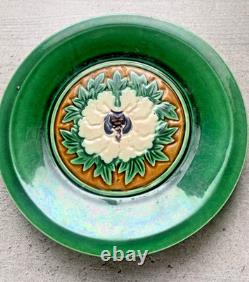
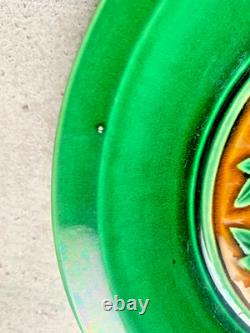
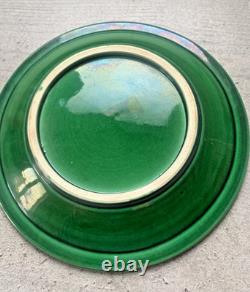


The design is a fine example of the Art Nouveau style, which flourished at the turn of the 20th century. The piece features a broad, gently sloped rim and a shallow well, all under a lustrous, rich malachite green lead glaze. This vibrant glaze exhibits a subtle iridescent sheen in certain areas, a common and often desirable characteristic resulting from the specific chemical composition and firing process of the glaze.
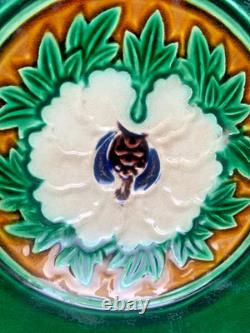
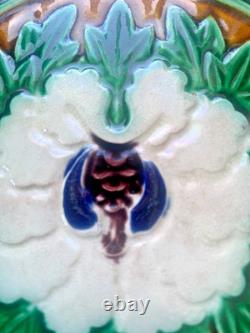
The recessed centre of the plate is the primary decorative focus, featuring a bold, high-relief moulded medallion. This central element depicts a large, stylised peony or chrysanthemum bloom, a motif popular in the Art Nouveau period due to the influence of Japanese art.
The flower is rendered with impressive dimensionality, its petals glazed in a creamy off-white with delicate green accents washing into the recesses. The centre of the flower is detailed with a deep cobalt blue or black glaze. The bloom is framed by a series of stylised green leaves, which provide a dynamic contrast against a rich, honey-coloured or ochre ground.
The various coloured glazes are carefully separated by raised clay outlines, a technique known as tube-lining, which prevents the colours from running together during firing and enhances the graphic quality of the design. The reverse of the plate is understood to be finished in the same continuous green glaze.